


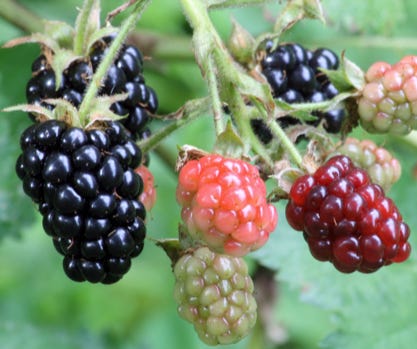
If you’re looking for a superfood to grow, it’s hard to beat blackberries. They can be grown in just about every state in the United States. They’re highly adaptable, and they thrive in USDA zones from 4 all the way up through 10. Here in California, in USDA zone 9, they do quite well. They grow nearly anywhere that has enough sun.
But some states are particularly well-suited for cultivation due to their specific climates. If you talk to anybody from Oregon and Washington, they will claim they have the best blackberries in the world, and they just might. In fact, in Oregon, the Willamette Valley area is the leading commercial producer of blackberries in the United States.
Here in California, they thrive along the Central Coast, the San Joaquin Valley and the Sacramento Valley due to the areas’ fertile soils and long growing seasons. Blackberries can succeed in Southern California, if provided with rich soil, good drainage, regular irrigation, heavy mulching and protection from afternoon wind and sun, especially in the desert areas.
North Carolina has a big commercial blackberry industry. They offer a warm climate and ample rainfall. Down in Arkansas, that state is actually home to major breeding programs for caneberries (which include blackberries), at the University of Arkansas. And they’ve developed many popular varieties. Tennessee is known for its rich, loamy soils and moderate temperatures that support healthy growth. And Georgia is excellent for heat tolerant varieties.
North Carolina State University provides this guidance for growing blackberries:
Blackberry Production Checklist
Choose a good site one year before you plant.
Prepare the soil before you plant: remove weeds, add organic matter, add fertilizer, make raised beds.
Choose a variety that is adapted to North Carolina and purchase disease-free plants.
Plant in spring (western North Carolina or USDA Zone 7) or spring or fall (central and eastern North Carolina or USDA Zone 8)
Build a trellis (can be done before or within first year of planting).
Irrigate on a regular basis.
Allow three to four new canes per plant to grow to the top wire.
Harvest a baby crop of fruit one year after planting and a full crop two years after planting.
After fruit is harvested, prune out fruiting canes.
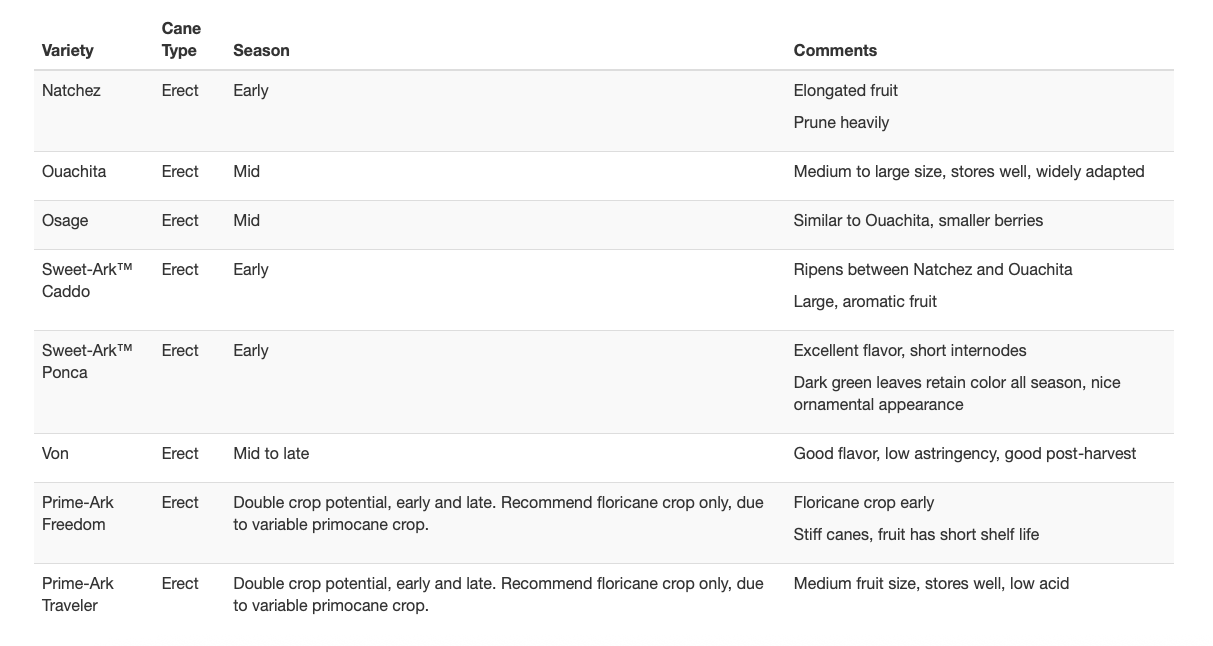
Blackberry Varieties Recommended for USDA Zones 7 and 8:
And there are cold-hardy varieties, too, for the folks in the Midwest and the Northeast. ‘Illini Hardy’ comes to mind as a very cold-hardy variety that you don’t need to think about growing here in California… unless you’re living up in Truckee. In which case, mulch the crowns well during the winter.
Top Cold-Hardy Blackberry Varieties (source: Double A Vineyards)
Illini Hardy (Thorny): Developed by the University of Illinois, this is often cited as the most cold-hardy variety available, surviving harsh winters better than other cultivars.
Chester (Thornless): Widely recognized for its high yield, excellent cold hardiness, and consistent performance in USDA Zone 5, it is a very reliable thornless option.
Darrow (Thorny): A vigorous, erect, and productive variety that is highly hardy, often recommended for northern climates.
Triple Crown (Thornless): Known for being very robust, productive, and having a very good, sweet flavor, making it a strong choice for colder regions.
Natchez (Thornless): Early-ripening, this variety shows good winter tolerance and is suitable for growing in a range of zones, including colder areas.
Key Considerations for Growing Blackberried in Cold Climates
Hardy Zones: While many blackberries thrive in Zones 7-9, the varieties listed above are suitable for Zone 5 and 6 and have better success in Zone 4 (especially with protection).
Winter Damage: Even with hardy varieties, extreme cold (below -15F) can reduce yields.
Protection: In exceptionally cold areas, protecting canes can improve survival rates.
Growth Habit: Erect types like Illini Hardy often handle the cold better than some trailing types.
Blackberries are considered a superfood.
According to North Carolina State University, a superfood is so-called because it has a high ratio of nutrients to calories, and that is a perfect description of a blackberry.
According to North Carolina State University, blackberries are low in fat and sodium. They make a very heart-healthy snack. They’re loaded with fiber, 7.6 grams per 100 per cup. Only 62 calories per cup. Carbohydrates, 13 or 14 grams. Less than 7 grams of sugar. Less than 1 gram of fat. And they even has 2 grams of protein. Plus, they are loaded with vitamin C, manganese, vitamin K, vitamin E, potassium. They’re high in antioxidants, which reduce free radicals, combat oxidative stress, and may protect against cancer, heart disease, and cognitive decline.
Ever since I had quadruple bypass heart surgery (and was discovered to have full blown Type 2 Diabetes, back in 2012, I changed the way I eat to include more fiber, and that includes a diet rich in berries. I’ve been eating my breakfast every day with 2 cups of berries on top of my whole grain cereals, including blackberries, raspberries and blueberries. And I’m still kickin’.
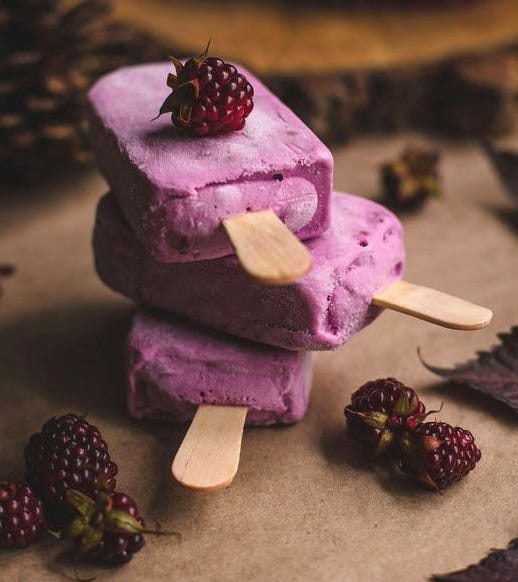
And it makes for a tasty dessert treat as the weather warms up. Check out this recipe from North Carolina State University for Blackberry Lemon Yogurt Pops:
Ingredient List
• 1½ cups plain Greek yogurt • ½ cup blackberries • Juice of 2 lemons • Zest of 1 lemon • 2 tablespoons sugar
Instructions
Combine all ingredients in a blender and purée until smooth.
Spoon or pour the mixture into a 4-serving popsicle mold.
Insert popsicle stick into each, and freeze until firm, about 4 hours.
Plant Several Blackberries For An Extended Harvest
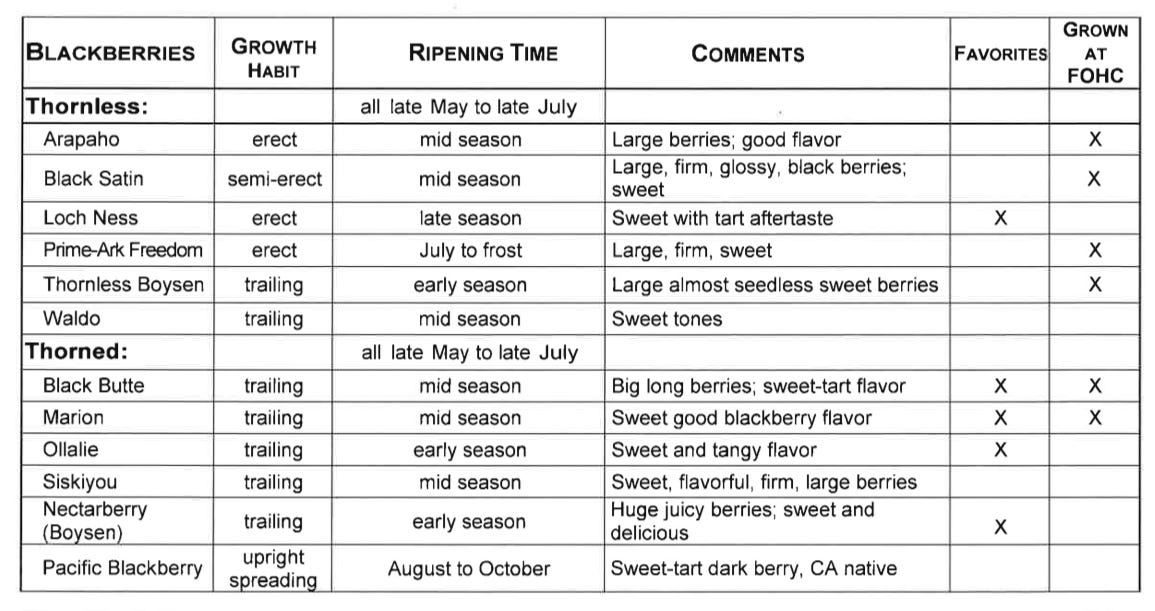
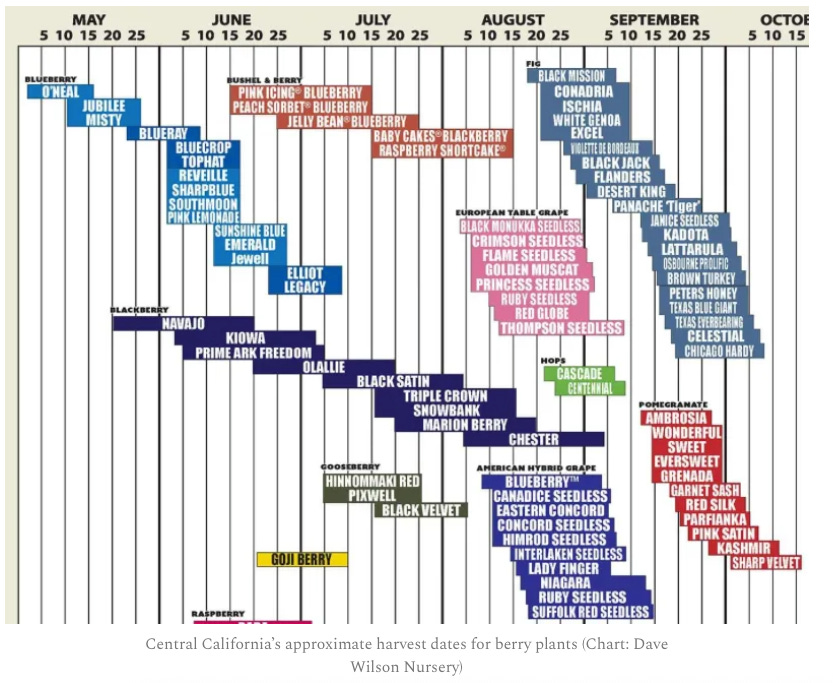
To prolong the blackberry harvest, plant several varieties with differing harvest periods, perhaps Navajo, Kiowa or Prime Ark Freedom for early ripening; Olallie and Black Satin for mid-season; and Marion Berry and Chester for late ripening blackberry varieties. The ripening times on this chart represent varieties growing in the California Central Valley. Your results may vary by a few weeks.
After the paywall, more pictures and charts about blackberries, as well as a human (me)-corrected transcript of our conversation with Jeff Smoker.


