
Garden book author and citrus expert Lance Walheim, is a big proponent of growing citrus trees in containers. We discuss his techniques in today’s podcast, along with shameless plugs for his new book, “Citrus: A Gardeners’ & Fruit Lovers’ Guide.”

For those of you in a hurry, here are some of the important points we touch on in the podcast:
Choose compact citrus varieties for containers — Meyer lemon, kumquat, calamondin, and Bearss limes are ideal; avoid vigorous types like Lisbon lemon or grapefruit, which will quickly outgrow most pots.
Upgrade container size gradually When repotting, go up only one size at a time (e.g., sleeve → 10-gallon → 15-gallon → half barrel). Transplanting immediately from the nursery pot to an oversized container can hold excess moisture around the roots and can cause rot.
Prioritize drainage above everything else Check that your container has multiple drain holes (at least 4–5 for a half barrel, ½-inch diameter or larger), and drill additional side holes if needed.
Raise your container off the ground Set pots on bricks, boards, or a furniture dolly to keep drain holes clear, prevent roots escaping into the native soil, and allow the bottom of the pot to dry properly. If setting pots in catch dishes, don’t let them hold standing water.
Use quality commercial potting mix, not backyard soil Garden soil may compact easily, drain poorly, and can introduce pathogens. Consider amending potting mix with perlite, builder’s sand, or pumice for improved aeration, keeping in mind this will cause it to dry out faster.
Avoid dark-colored pots in hot climates Black plastic containers in full sun can heat soil to 120–130°F on warm days, killing roots. Use fabric pots, light-colored containers, or nest a dark pot inside a larger one filled with mulch for insulation. Surrounding the citrus pot with other pots can help keep the citrus roots cooler.
Fertilize consistently and at a diluted strength Use a liquid or water-soluble citrus fertilizer every two to four weeks. Make sure it contains not just nitrogen but also phosphorus, potassium, and micronutrients like iron, zinc, and manganese.
Leach the soil every one to two months Run water slowly through the entire pot multiple times to flush out salt buildup. A white mineral ring around the pot is a sign salts have accumulated.
Use a moisture meter to check watering needs Finger-testing the surface is unreliable in root-bound pots; a moisture meter tells you conditions 12 inches down where it matters.
Mulch the top of the container A thin layer of bark chips or compost slows moisture loss and protects surface roots. Keep mulch away from the trunk.
Transition plants indoors and outdoors gradually Over one to two weeks, move the pot into progressively shadier spots before bringing it inside, and reverse the process in spring. Expect some leaf drop indoors; a bloom cycle usually follows.
Treat for pests before moving indoors Apply Neem oil or Spinosad before bringing the tree inside to prevent scale or whiteflies from establishing. Avoid applying oil when temperatures are above 85–90°F.
Prune to maintain size and airflow Keep the tree’s center open for air circulation, remove crossing branches, and cut back vigorous shoots. Do major work (including root pruning, if necessary) in winter, the least stressful time.
Look for Flying Dragon rootstock if you want a true dwarf This trifoliate orange rootstock keeps trees to 5–6 feet and is well-suited to long-term container growing, though it can be hard to find.
Buy only from reputable nurseries Asian citrus psyllid and HLB disease have spread to all major citrus states. Purchasing certified trees (rather than propagating cuttings from friends) is the safest way to avoid bringing home an infestation.
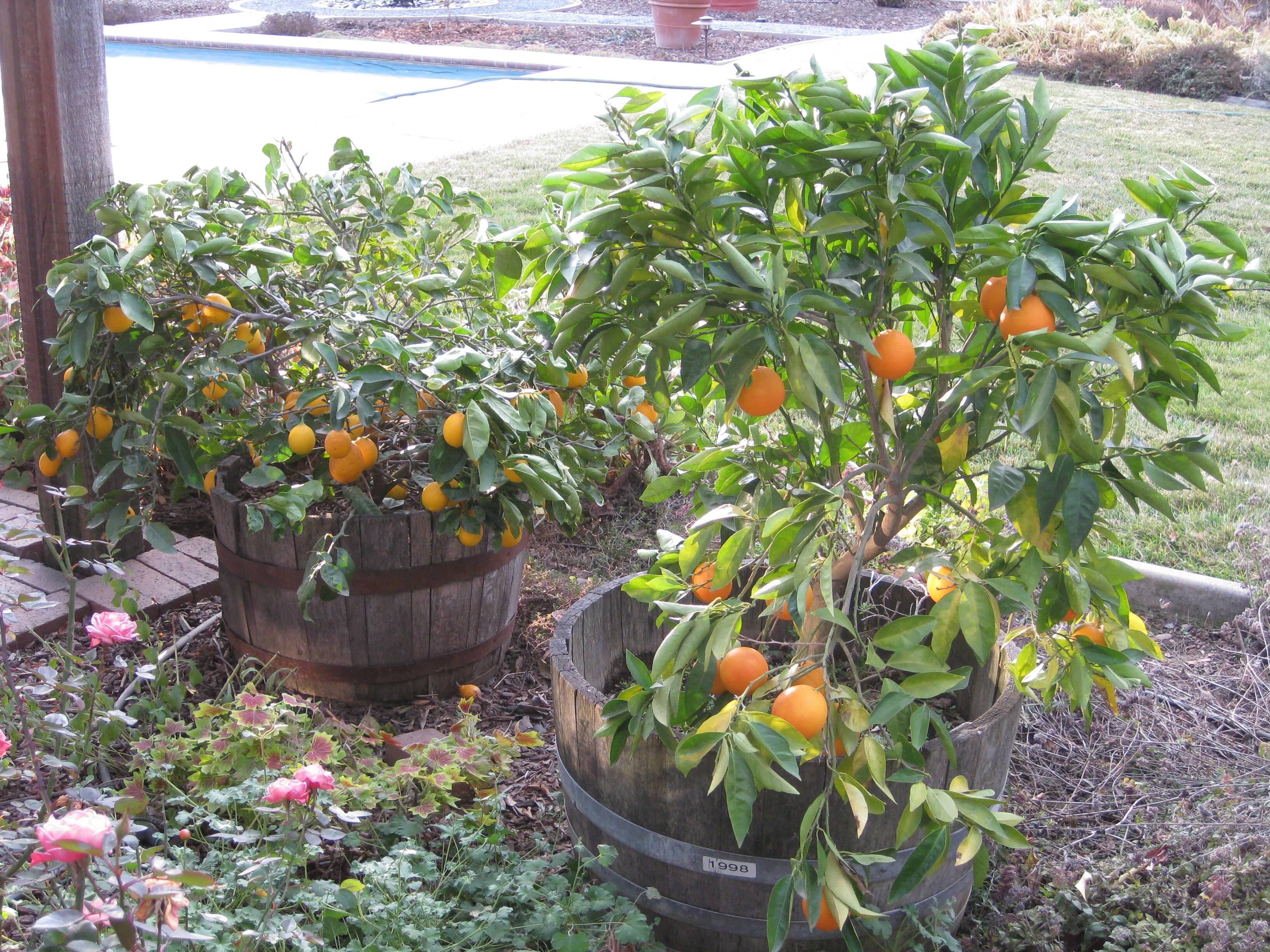
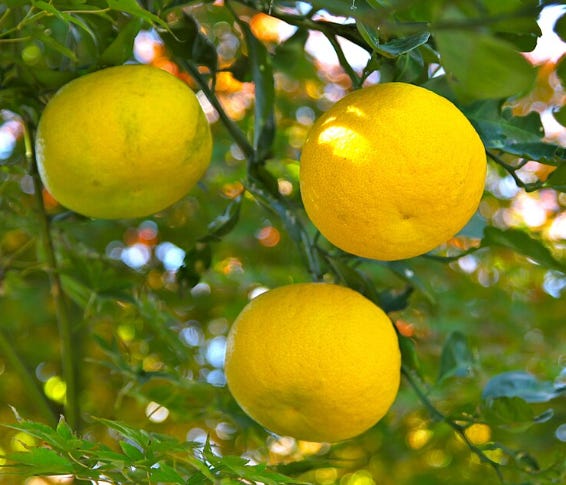
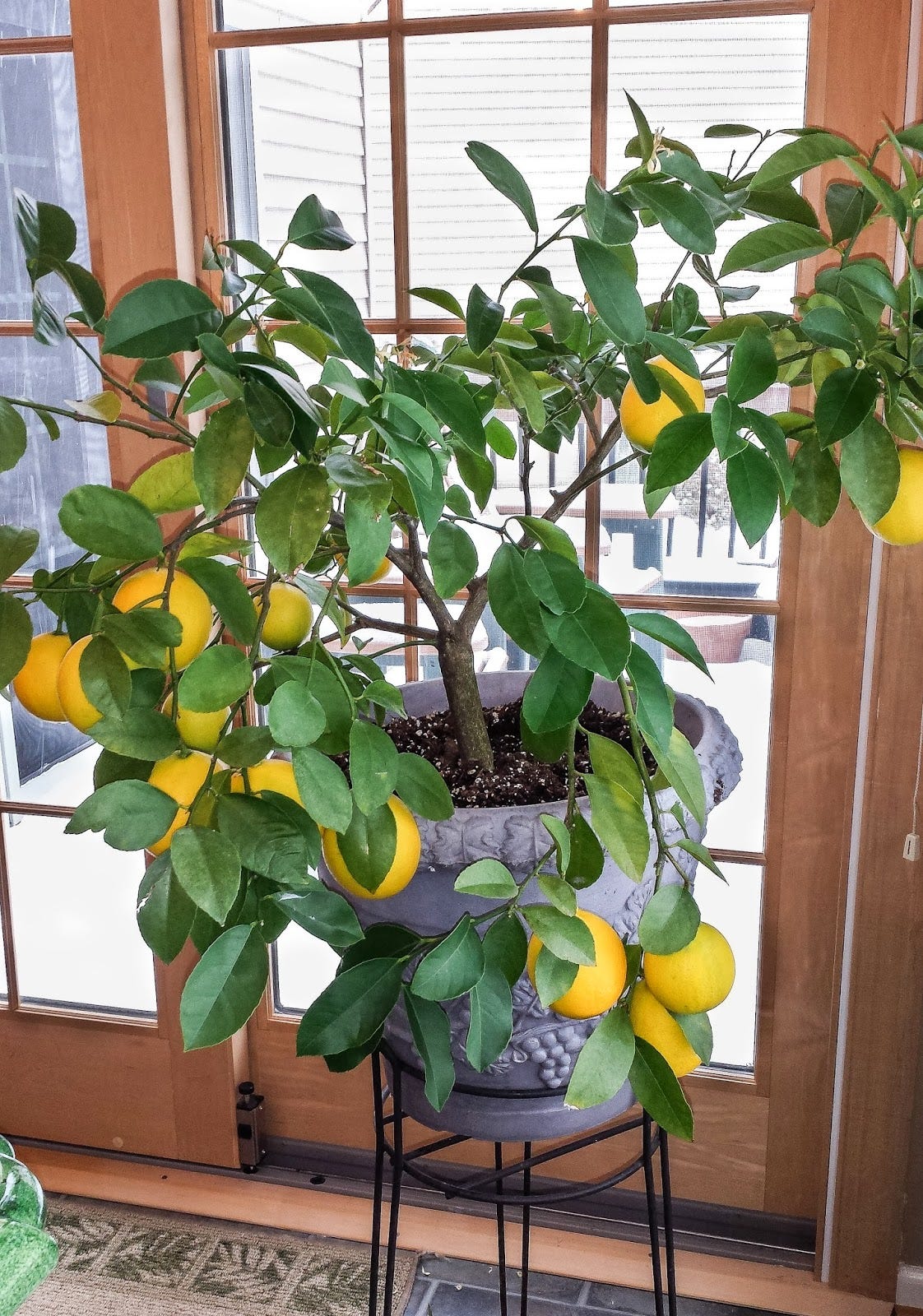
Perhaps you would rather use your eyes instead of your ears. Not a problem here. The podcast transcript is below, which includes more citrus information, links, and pictures that you won’t find in the podcast. For instance, what is the U.S. Citrus Nursery? You’ll find that link in the transcript. What’s a Yuzu? Yous will see a picture. Can you grow citrus in Minnesota? We have a picture and a link!
A Deep Dive into Citrus Containers TRANSCRIPT
Farmer Fred:
[0:00] A few months ago, we had the pleasure of talking with Lance Walheim, citrus expert extraordinaire, author of the book “Citrus, a Gardener’s and Fruit Lover’s Guide” (find that chat here). And we covered a lot of topics in that conversation about growing citrus, especially growing citrus in non-citrus environments. For example, in USDA zones four through seven, you might have to bring them indoors. But we didn’t spend too much time talking about growing containerized citrus in great depth. We talked about a few things, though.
Maybe you may want to bring some friends in to help you move the plant indoors, things like that in the wintertime, if that’s what you do. How much fertilizer they need and things like that.
But I thought we’d do a deep dive into growing citrus in containers, because a lot of people now have much smaller backyards, and maybe that little sunny spot is only a few square feet. And if that’s the case, then growing citrus in containers on your patio is the way to go. And Lance Wallheim, it’s a pleasure talking with you again. Of course, the book is Citrus, A Gardener’s and Fruit Lovers Guide. And looking up here at my garden bookshelf here, which is actually 1, 2, 3, 4, 6, 7, 8, 9, 10, 12 shelves of garden books. Yours are within arm’s reach of me. Several of your old citrus books, your wonderful rose book, The Natural Rose Gardener, and a lot of the work that you used to do with the Sunset Western Garden Book. Boy, that would be nice if they brought that back.
You were an editor with it, and you also worked on their Western Landscaping book, and I imagine a few others.
Lance Walheim:
[1:45] That’s right. Great to talk to you, Fred.
Farmer Fred:
[1:48] Growing in containers is tough. And not only because you have to pay so much close attention to especially drainage and fertilization, but sometimes the sizes of the pots can be very confusing for people. A lot of people, when you say, “OK, you want to transfer that plant from a five to a 15”, they have no idea what you’re talking about. So maybe it’s a good idea to talk about the actual dimensions of some of these containers. Now, Lance, when people go to a nursery these days to look at citrus plants, they are usually potted up. And depending upon your wallet and what size tree you buy, that tree might be in a smaller container or a larger container. I think the smallest I’ve ever seen a citrus tree in at a nursery was a five-gallon container. Does that sound about right?
Lance Walheim:
[2:41] Yeah, some of the nurseries, especially outside the citrus region, are starting to grow in smaller pots and four-inch sleeves, little squares that are deeper than you usually see. And that’s because the quarantines for Asian citrus psyllid and HLB or Huong Long Bing require the trees to be grown in protected screenhouses or greenhouses. And so to maximize space, some of the nurseries or a lot of the nurseries are growing them in smaller containers. So you may see those, but in general, you see five-gallon pots, 10 gallons, or 15 in nurseries. And that’s referring to the amount of soil in the pot.

Farmer Fred:
[3:20] Even in the nursery industry, those references have changed sizes. I’ve seen one-gallon-sized pots shrink over the years.
Lance Walheim:
[3:31] Yeah. And you see two and three gallon pots. Yeah. And different colored pots. It’s a new world out there.
Farmer Fred:
[3:36] All right, so for five-gallon containers, that’s roughly a diameter at the top of 11 to 13 inches and maybe a height of 9 to 11 inches and holds a little over a half cubic foot, about six-tenths of a cubic foot of soil. A 10-gallon container is usually 14 to 16 inches across and 12 to 14 inches high and holds about 1.3 cubic feet. And when you go to buy soil at a nursery, it’s usually sold in cubic feet as opposed to gallonage. And the cubic feet in bags can be anywhere from a half a cubic foot to one to one and a half to two. And if you live with a football team, you could buy the three cubic feet size to load it in the car for you. And the 15-gallon container is 16 to 18 inches across and maybe 14 to 18 inches tall. And that can usually hold about two cubic feet of soil. And then there’s 20-gallon containers, which are 18 to 22 inches across, 16 to 20 inches high, and holds about... Well, it’s a little over two and a half cubic feet of soil.
And even though it’s nice to say that the bigger, the better for pots is true when it comes to citrus, it’s something you have to do gradually. And you mentioned the fact that the citrus now may be growing in sleeves or you may be purchasing them in what look like fiber pot sleeves or even plastic sleeves. And you would have to, as soon as you get home, transfer those into something bigger. And those sleeves are usually, what, about a foot tall?
Lance Walheim:
[5:15] Yeah, that’s correct.
Farmer Fred:
[5:16] All right. So that would be about the depth of a five-gallon container. So you may want to, when you transfer it to its first bigger home, transfer it to maybe a 10-gallon container that has a height of 12 to 14 inches and holds about 1.3 cubic feet. Why is it a good idea when transferring citrus trees from pot to pot, you only go up one size as opposed to saying, taking it out of that sleeve and plopping it right away into say a half barrel?
Lance Walheim:
[5:48] Yeah, that’s right. I’ve always said the bigger, the better, and that’s eventually you’re going to want to have it in a bigger container. But the idea is if you have a smaller tree and you put it in too large of a pot, that it’s going to take a while to get the roots into the surrounding soil. And you may have a lot of wet soil around the tree that keeps the root ball too wet because aeration, as we know, and drainage is very important with citrus with any potting soil. So you want to do anything that’s going to prevent that soil from staying too wet for too long. So gradually moving up to a half barrel, which I think is a perfect size is a good idea.
Farmer Fred:
[6:29] You point out in your book when it comes to citrus containers that the classic citrus container is a 24-inch square wooden box. And, of course, you can paint that all sorts of different colors. I would just make sure it has drain holes. I think when we talk about citrus in containers, we have to concentrate on the D word, Drainage.
Lance Walheim:
[6:49] That’s exactly right. And, we talk about the drainage and having a quality potting soil that drains well. But you have to look at the bottom of the pot. I mean, with half barrels, a lot of those don’t have drainage holes. So you have to use a large drill bit, drill four or five holes in it. Unfortunately, , if you’re not using something that’s drillable, you’re only going to have one hole in the bottom of it. So it’s important that you make sure you check that hole for clearance and so the roots don’t fill it and that you keep the bottom of the pot out of any type of drainage dish or anything like that. That’s something I see all the time. People forget that those drainage dishes can carry water for a long time, especially in winter, and that can really keep the bottom soil in the container wet, too wet, and cause problems with soil diseases. Drainage is key, and that’s why a lot of times if you take a potting soil, I will amend it a little bit. The other disadvantage of a potting soil is that over time, they’re organic, so they’re going to break down. And over time, the root ball will be getting deeper and deeper in the pot. Roots will start showing up on the surface. And so degradation is a big problem. We can talk about that a little bit later. But to prevent a little bit of that and improve aeration, people are adding more mineral components to some of the soils, things like perlite, sand. But when you do stuff like that, we can talk about the various aspects of growing in containers, watering, fertilizing, But they’re all interrelated. And if you change the texture and the consistency of your soil, add more mineral content, that also means it’s probably going to dry out quicker. The nutrients are going to leach faster. So when you do one thing, you make a change here, it could affect how you care for the tree in other areas.
Farmer Fred:
[8:47] And a lot of people, too, don’t realize until it’s too late that that big, pretty ceramic pot with the one hole in the middle could eventually get clogged by the roots looking for more soil. And so the roots grow out of the pot, clogging that drain hole and become established in your soil.
Lance Walheim:
[9:08] That’s exactly right, especially if the pot is sitting on regular soil in the garden. And that’s why it’s a good idea to raise the pot up a little bit so that that the bottom of the pot kind of dries out like the rest of the pot. But, yeah, I see that over and over again. In the winter, you go into a pot and there’ll be water still sitting in the top of the pot, the container. And it’s because the bottom is completely clogged with with roots. And that’s a difficult situation. I mean, you can use a drill to, , clear those holes, but eventually it’s probably going to happen again. So even once you have a catch container or something, I will usually put stones or bricks in the bottom of that to keep the pot out of there.
Lance Walheim:
[9:49] There’s a lot of different considerations you have to take when you’re choosing a pot. Mobility, the color of the pot, the size, the weight, how good it looks. I mean, the mobility is a big advantage of growing citrus in containers, putting them on wheeled platforms or whatever. But if you live in a cold climate, it makes it easier to protect. If you live in a hot climate, maybe just the opposite. If you have a dark black pot that absorbs a lot of heat and you live in a warm interior area of arid climate, it’s going to get hot. And so you might want to move it out into a shadier place in the hottest part of the day. So that mobility really gives you a lot of advantage. The other advantage to growing a container is it really keeps the tree smaller. So it’s easier to control pests. It’s better in small spaces, obviously. But when you can control the size, you have less problems if you’re dealing with, , serious pests like psyllids and the disease that it transmits.
Farmer Fred:
[10:57] Just to clarify one thing you did say when you talked about putting rocks and bricks in the area, you meant in the soil, not in the pot, because I think we’ve talked about this before. Anytime you put foreign objects in the bottom of the pot so that for the economically minded gardeners out there, you think, “well, I’ll just put some stones or pebbles in the bottom of that pot or styrofoam and not have to buy so much soil.” When you do that, you are creating a serious slowdown when it comes to drainage. So those bricks and boards or rocks to support the pot are on the outside of the pot, underneath it, not inside the pot.
Lance Walheim:
[11:37] Absolutely. Good catch.
Farmer Fred:
[11:38] Well, one answer I have, because I have my citrus in the hottest area of the yard for winter protection, it’s a along a south-facing fence about 15 feet from the house. So you get reflected heat from the house along with reflected heat from the rock pathway. But they’re very happy there, and I don’t want to – I couldn’t move them if I want to do. They’re in the ground.
Lance Walheim:
[12:04] Right. That’s an important thing to consider also. We can talk about growing containers and things, but you still have to give them the same basic needs. I mean, they need full sun six to eight hours, but in some climates where it gets really hot, a little bit of afternoon shade won’t hurt. Taking advantage of microclimates like what you have are is very important. And if you’ve got mobile containers, you can move them around and take the best advantage of those.
Farmer Fred:
[12:31] Exactly. I’m going to be looking around, I don’t know if I’ll be able to find it or not, but I have, I think, on a DVD somewhere back when I was doing segments for the HGTV garden shows. And we did one on potting up a citrus tree into a half barrel. And the production company went out and bought me this little roller set to set the half barrel on. And, , it went fine until I tried to move the whole unit, the rollers with the barrel full of soil with a tree in it. I moved it about six inches and then the whole thing collapsed. Because you need a very sturdy set of rollers beneath a half barrel with soil with a tree. And the real good answer is put it on a furniture dolly.
Lance Walheim:
[13:22] Yeah, the weight of the container becomes an issue as the tree matures, especially if you are going to move it indoors. And rollers certainly help and the sturdier the better. Even the weight of the container, we talk about, , always being able to empty those catch basins at the bottom of the pot if you’re trying to keep your deck or your patio clean. Just lifting, if you’ve got a half barrel, just getting that anything out of underneath it or a heavy pot is going to be difficult. So you ought to consider the weight of the potting soil when you’re thinking about where you’re going to have to move the plant.
Farmer Fred:
[14:02] Another thing to consider for homeowners, especially those who have just moved or maybe they’ve just moved into a new home that doesn’t have a poured concrete patio yet or any sort of finished patio, is consider drainage in that upcoming patio to allow for you to place large containers of plants with drainage right below it. So the drain water can be taken away by underground pipes, but that takes forethought.
Lance Walheim:
[14:29] Yeah, you’ve got to plan ahead for that. The other thing to plan ahead is to think, as we talked about before, that certain varieties are probably better adapted to containers than others. And that tends to be some of the smaller varieties like the Meyer lemon, the kumquats, calamondins, satsumas are nice compact trees, seedless tissues. If you’re going to grow a Lisbon lemon in a pot, you’re going to run out of room pretty quick. They’re fast-growing trees, and they’re vigorous, same with a grapefruit. So it’s important to think about the varieties you’re going to use and the adaptation to the climate where you’re growing them.
Farmer Fred:
[15:08] Four Winds Growers is a wholesale citrus grower here in California. They have an excellent website, very encyclopedic, and they have a section about the three easiest citrus trees to grow indoors. And the number one tree is Meyer lemon. Number two, I was hoping they’d say calamondin, but they said calamansi. And number three was the Bearss lime. Calamansi, is that a form of a calamondin or just an alternate name?
Lance Walheim:
[15:34] That’s just an alternate name used, I think, in the Philippines and in Asian countries. Calamansi, yeah.
Farmer Fred:
[15:42] And the calamondin is a sour orange?
Lance Walheim:
[15:45] Calamondin is a sour kumquat-like fruit. It’s small. It’s probably got kumquat in its heritage, but it looks like a kumquat tree. It’s a tree that has an important place in many Asian cultures. And it’s a great indoor-outdoor plant because it sends the re-bloom and set fruit off and does well in indoor conditions.
Farmer Fred:
[16:08] And when it comes to lime trees, they can be very sensitive to cold. The Bearss lime, I guess, is the most tolerant of cold weather. But in this case, in the case of limes, cold weather might be anything, what, below, what, 34 degrees?
Lance Walheim:
[16:23] Well, yeah. I mean, the Bearss lime is maybe a little bit hardier. But yeah, anything below freezing, you’re going to want to have some protection on the tree. That’s for sure. The duration of the cold is going to be important. But yeah, anything below freezing is going to be tough on a lime tree for any type of duration, three or four hours.
(FREDNOTE: A thorough article about growing citrus indoors: Growing Dwarf Citrus, from the University of Maryland Cooperative Extension)
Farmer Fred:
[16:42] What are the most temperature-sensitive citrus trees to grow?
Lance Walheim:
[16:47] Well, lime is certainly one of them. Citron is definitely one of them. The thing about limes, too, is as soon as the weather starts, the days get shorter and it starts getting a little cold, they tend to drop all their fruit pretty quickly once they’re ripe. So the limes and citrons are probably the most frost sensitive. Then you’re talking about lemons after that. Meyer lemons, of course, is hardier. It can take temperatures…. Well, , we had freezes on our property in Exeter down to 14 degrees, and we had some minor damage on the Meyer lemon trees. We lost all the fruit, of course, but they’re pretty tough trees.
Farmer Fred:
[17:29] For people who don’t know, Exeter is in the Central Valley of California, not too far from Fresno. And it is a citrus growing region, but sometimes these Alaskan fronts come in and it gets real cold.
Lance Walheim:
[17:42] Yeah, it sure does. And as a matter of fact, it’s happened. Over the 30 years we were on the property, we lost our whole crop twice. We had specially citrus. Obviously, we had 15 or 16 different varieties down there, but we lost our whole crop. up two years, I think, out of the 30. But back in those days, just to see how things are changing, we would have frost protection 12 to 15 days a winter. Last winter, I don’t think they had to have any frost protection. I mean, just didn’t have any really threatening, killing frost.
Farmer Fred:
[18:16] Yeah, it’s a little different for commercial growers than it is for the backyard gardener. Commercial growers can hire a helicopter to hover over their property.
Lance Walheim:
[18:24] Right, right, or turn on the wind machines, turn on the water Yeah.
Farmer Fred:
[18:29] But for the backyard gardener, as far as frost protection goes, it comes back to the old standards of frost cloths, moist soil, and large Christmas tree lights and mulch.
Lance Walheim:
[18:40] Yeah, that’s true. And with a smaller container grown tree, that’s easier to do.
Farmer Fred:
[18:45] Yeah. Speaking of mulch, and this is a good point to bring up too, you talked about how in a really hot area, especially a black plastic pot can get really, really hot on a warm afternoon up to about, I’ve seen temperatures in pots, black plastic pots I have, that on a 95 degree day, that interior temperature of the soil could be 120, 130 degrees, which is enough to kill the roots. So one thing to consider is placing that pot inside a larger pot that has a drain hole and then filling the gap between the two pots with mulch or something like that, just to sort of insulate it a little bit.
Lance Walheim:
[19:25] Yeah, you can do that with smaller pots. It’s a little harder to do with bigger pots. But the other thing you can do is use some type of shading, but put other container pots around the black pot, especially with black plastic. That’s what really gets hot. The other thing that in really hot climes to think about is that if you have a drip irrigation system, the black drip pipes, the water can get very hot. So you have to you have to be careful with that or you’re going to kill roots when you turn it on if it’s too hot. So be careful where your pipes are.
Farmer Fred:
[20:01] Or yeah, and wrap those in something or keep them covered.
Lance Walheim:
[20:05] Shaded.
Farmer Fred:
[20:05] Yeah, that’s that’s very true. All right. So, Can most citrus be contained, if you will, in a container by pruning?
Lance Walheim:
[20:16] Yes, certainly can. I mean, like I said, some of the vigorous types, the lemons, it’s going to be more difficult because they are just, so vigorous. And even in the ground, we have to keep them pruned. But you can do it. The long history of growing citrus in pots and in orangeries in Europe and things, they’ve done it for many, many years. And, , long-term, like I talked about, your soil is going to degrade. It’s going to sink. You’re going to have to, after five or six years, you’re going to have to look at that. It becomes more difficult to water as it gets root bound. So I have done some root pruning on container trees. And what you basically do is pull it out of the pot and shave a little bit of the outside of the roots off and then replenish with fresh soil and put it back in the pot. It can be difficult with a large tree, but I saw a video on actually on Four Winds, I think, YouTube channel that where they were not really doing the same type of root pruning, but pulling the old pot, the old citrus tree out of the pot and really rough it up and removing a lot of the soil from the root ball and then repotting it again. Now, that can be a traumatic thing. You have to be careful with it because citrus don’t like to be disturbed like that too much, but it can really rejuvenate a tree, of course, and that goes along with proper watering and proper fertilizing.
Farmer Fred:
[21:43] Being that it’s an evergreen tree, how does the backyard gardener determine what is the dormant season? That would probably be the least stressful on doing something like that to a citrus tree.
Lance Walheim:
[21:54] Yeah, you’d want to do it in the winter, not in hot temperatures. And you might accompany it with some light pruning at the top of the tree. But in answer to your other question, since citrus are smaller in the containers, they’re going to be easier to prune. The same rules kind of apply. You want to make sure the center of the tree is open so that you can get any sprays if you need to, and you can get the air circulation in there, cutting back any crisscrossing branches, removing any really vigorous shoots or cutting them back will help keep the tree small and also make it easier to maintain.
Farmer Fred:
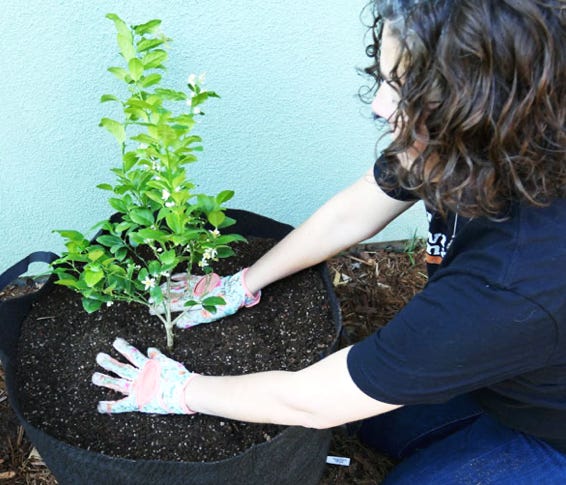
[22:32] Yeah. Also on the subject of pots, I’d like to bring up the subject of fabric pots because in my tests here, fabric pots... tend to stay a lot cooler than plastic pots as far as the hot summer temperatures go in the soil. And other than the fact they don’t look very nice, but it’s better for the tree if you have it in a fabric pot. Now, bringing a fabric pot indoors may be more or less difficult because a lot of fabric pots, like Smart Pots, have handles on them that one or two people could easily move it inside.
Lance Walheim:
[23:10] Right. like a clay pot, which of course is heavier, but you get a little evaporation and aeration from the side of the pots. Do you find that you have to water those Smart Pots more frequently than you might in some other containers?
Farmer Fred:
[23:24] Not necessarily. For one thing, fabric pots, especially the Smart Pot, has millions of micropores that allow for better transfer of air and water. So there are no drainage issues as far as that goes. And the root system sort of self-prunes because when it hits that micro-pore air layer along the surfaces of the pot, it tends to just turn around and go back.
Lance Walheim:
[23:52] Uh-huh. Well, that’s good. That sounds great.
Farmer Fred:
[23:55] My biggest complaint about using fabric pots is, well, they look kind of funky. But they work great.
Lance Walheim:
[24:02] Yeah. Yeah. I’ll have to give those a try.
Farmer Fred:
[24:05] We’ve got a lot of trees that you can choose from when it comes from growing citrus. And you’ve mentioned this before in the past that for those that live in colder zones like USDA zones four through seven, and you’re just starting off in the world of growing citrus, probably the Meyer lemon might be the best bet.
Lance Walheim:
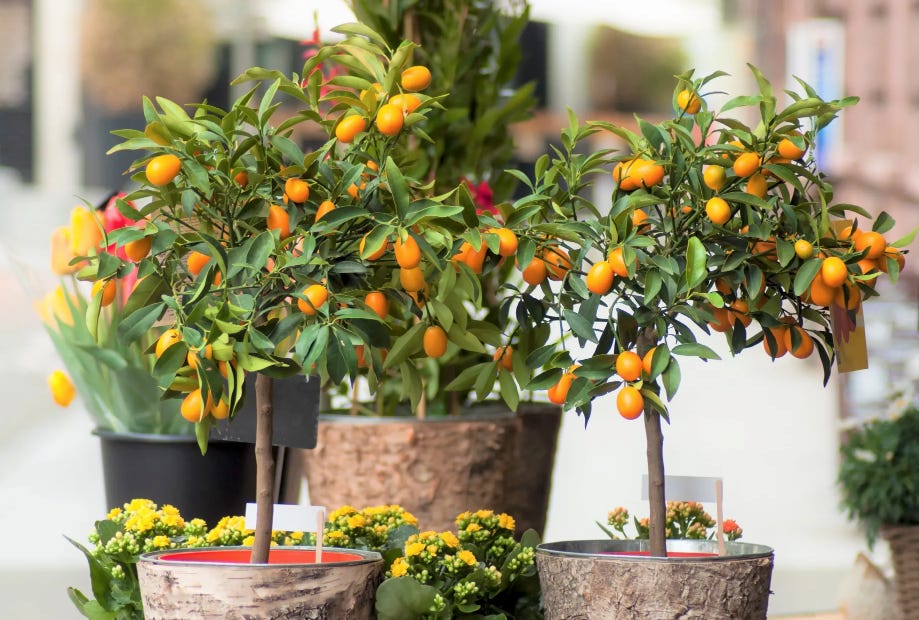
[24:23] Yeah, that would be the best bet for standard citrus. You’re going to have probably the best luck with more acidic varieties like the limes, like the kumquats, like Meyer lemons. Kumquats are also very hardy trees. And there are also a lot of oddball citrus relatives that are extremely hardy, down to, say, around 15 that people are growing in colder climates outdoors. A yuzu is another one that’s very hardy. It’s native to mountain areas. And if you’re not familiar with that, it’s becoming very popular in a lot of different cuisines and used to make ponzu sauce. It’s a very thorny tree, fast growing, but interesting fruit.
Farmer Fred:
[25:09] And for USDA zones four through seven, obviously, you’ll be bringing it indoors for the winter. And I imagine you’d want to do that before the first hard freeze.
Lance Walheim:
[25:21] Yeah, you want to do it before. You can watch the weather when the temperatures are starting to get into the 30s. That’s when you got to start worrying about it and maybe transition it indoors. If you can kind of move it into shadier areas before you bring it inside, that’s a good idea. Same if when you’re bringing it back outside and then bring it into an area that’s got bright southern facing window is ideal. Greenhouses, sunroofs are perfect. But of course, the size of the tree can not only make it hard to carry inside, but finding a spot for it indoors can also be difficult. You can use supplemental lighting if you need to. And you want to keep the humidity up indoors as well. I mean, when the heat is on, the humidity goes down, and that can make you get a lot of leaf drop and stuff. Basically, if you bring a Meyer lemon indoors, a lot of times it’s going to lose most of its leaves, which can be upsetting. But right after that, it’s going to go into probably a bloom cycle, so you get a nice bloom, and then it’ll start growing some more foliage. So be patient. It’s not easy, but you can do it.
Farmer Fred:
[26:34] And I would think. too, especially if you’re moving it into a greenhouse, not so much indoors, although it’s possible indoors as well, that there could be pests that come inside like whiteflies.
Lance Walheim:
[26:45] Yeah, whiteflies are definitely a serious pest. I think the other one is scale. that’s a problem. So it’s a good idea if you’re going to treat the trees before you bring them in with something like a spinosad or a neem oil or something like that and get rid of the pests before you go indoors. That’ll certainly help.
Farmer Fred:
[27:07] Yeah. And be sure to follow any directions if you are applying an oil like a neem oil, because some oils can be very harmful to a tree if the temperatures are in the upper 80s or 90s.
Lance Walheim:
[27:19] Yeah, that’s right. I find talking to people that a lot of people do have trouble with neem and because they don’t realize it’s an oil, I think they have better luck when they’re, depending on the pest, it’s gotta be labeled for the pest, but the spinosad, I think they have better luck. But when you’re dealing with scale, the oils are one of the best control measures.
Farmer Fred:
[27:39] Talk a bit more about this transition of moving the plant from the outdoors to the indoors. How long of a process is it?
Lance Walheim:
[27:48] Well, I think it’s best if you started over a period of a couple of weeks, when the temperatures start getting down. there’s some practical disadvantages of having to do that to move it. But some people and me included will bring the tree indoors, leave it indoors for a portion of time and bring it back out back and forth for a week or 10 days. And but at least move it into a shadier location and then certainly after the winter when you’re going to move it outside you want to do that slowly as well. put it out in a shadier location and gradually bring it out to a sunny location and start feeding it a little bit more regularly so yeah. if you think about it, it’s a dramatic change from bringing a tree outdoors to indoors and citrus is going to react to that. So it helps to do a slow transition period.
Farmer Fred:
[28:44] Are there good light systems indoors for a citrus tree?
Lance Walheim:
[28:48] There are good light systems. I mean, most nurseries now carry some great supplemental lighting and the low voltage type of, oh, what, I’m forgetting the name.
Farmer Fred:
[29:04] LEDs?
Lance Walheim:
[29:05] Yeah, there you go. And, at Four Winds Growers, they have some guidelines for how much lighting it needs and how it should be on eight to 12 hours. But the question is, where exactly are you going to do that in the garage? I know people are very successful with it. So, there’s a little homework to do about what’s out there. They’re cool, they’re not hot. Do a little research on your lighting and get the right ones.
Farmer Fred:
[29:32] You talked a little bit about root pruning and refreshing the soil, and we should talk about the best potting soil mix for citrus. And that’s really dealer’s choice because what you’re looking for is just something with good drainage.
Lance Walheim:
[29:48] That’s it. As long as you’ve got good drainage in the bottom of the pot, too. I mean, I’ve done everything from mix my own soil, use commercial potting soils, or amend a commercial potting soil. A lot of people are going towards a little bit more mineral type of potting soil with more perlite or more sand. But like I said, at Four Winds, they recommend a 511 potting soil, which you see a lot of people talking about online, which is five parts ground bark, which is less than a half inch diameter, so smallish ground bark. It’s usually pine or cedars or pine or fir is what you can find, but it may be tough in some areas to find. Then one part perlite and one part potting soil. Now, that kind of a soil is going to dry out quicker, and it’s probably not going to hold as much nutrients as in other soils. So you have to make some changes in that.
Lance Walheim:
[30:50] There’s U.S. Citrus Nursery, which is in Texas. They can’t ship to any other citrus states, but they have some interesting soils, and they have a guide to potting soils, which is pretty in deep, but you can see how far people are willing to go to get the perfect potting soil, and the perfect fertilizer. Personally, I think you’re right. The big thing is the drainage. As long as you’ve got good drainage, it doesn’t hurt to add a little bit of mineral to it, but if you add too much of the wrong stuff, you’re going to create more weight and it’s going to have to be watered more often.
Farmer Fred:
[31:29] Yeah, and some of that good stuff can be hazardous to your back. And I’m thinking of pumice.
Lance Walheim:
[31:37] Yeah, that’s exactly right. And so we’re talking about fertilizers and the key, the fertilizers are very important. And a lot of the potting soils you buy, I mean, if you learn to read the potting soil labels, you can find out really what the quality is. Is it buffered for the pH? What are the ingredients? Are there any nutrients in it? Is there any perlite in it? These are things you need to know because you’re going to have to supplement whatever’s not in there.
Farmer Fred:
[32:13] I would think people would be confused, too, if they are transitioning citrus trees throughout the year from indoors to outdoors or outdoors to indoors about, okay, which soil do I use? Do I use an indoor potting mix or do I use an outdoor potting mix? And I I think outdoor potting mix probably has better drainage.
Lance Walheim:
[32:33] Yeah, it just depends on exactly what’s in it. Some of them have composts. Really, what the key thing is that you start off with the right fertilizer to begin with, and that you have the drainage. Once you get into nutrient problems with citrus, it can be difficult to correct them. So it’s important to realize that a lot of that stuff is not in the potting soil, and that because potting soils are going to need more frequent watering, the nutrients are going to be leached out. So you have to supplement those consistently.
Farmer Fred:
[33:11] You have to fertilize more often, but at a weaker strength. As our friend Debbie Flower would always say about watering potted plants or feeding potted plants, you want to feed them weekly, but weakly.
Lance Walheim:
[33:26] That’s right. I mean, more consistent fertilizing is really important. And if you are going to fertilize that often, you should dilute the fertilizer a little more. You should water, you should fertilize it. I fertilize it every two weeks. You should do it at least every month. And the type of fertilizer you use, of course, is important.
Nitrogen being the most important of the macronutrients, you also want some P and K in the fertilizer, but it should also have the micronutrients, iron, zinc, manganese, and calcium and magnesium also could be deficient. So it’s important that you learn how to read a fertilizer label and know exactly what you’re getting.
And again, people ask, like, what’s the perfect potting soil? Well, what’s the perfect fertilizer? If you go online and search citrus fertilizers, you’ll see there are a lot of excellent ones. And, again, if you want to check on the U.S. Citrus website, they offer some real specialty citrus fertilizers. The concern is, I’m not averse to using Miracle-Gro. It’s something like a Miracle-Gro. It’s a quality fertilizer. But people do get concerned about the salts and what it does to the microorganisms in the soil. So a lot of people prefer to go to organic fertilizers. And the problem with most organic fertilizers is they don’t contain those micronutrients. So you have to supplement with something like a seaweed extract or something like that to give it, but you still may not get enough. So it’s very important you choose your right fertilizer.
Farmer Fred:
[35:08] In the outside, one of my favorite fertilizers is fish emulsion. Indoors, I would be reluctant to use it just because of the aroma. The cat would love me, but I don’t think the wife would love me.
Lance Walheim:
[35:20] Yeah, that’s part of the problem. Fish emulsion does, but you get the benefit of the microorganisms. I’ll sometimes top my pots with a little bit of compost to make sure you get that. But, yeah, people go to great lengths to look for the perfect fertilizer. And if you read the fertilizer label, you’ll know what’s in there. The nitrogen is most important. But if that’s all you’re applying, you’re going to have problems with the color of the foliage. And they’re just not going to be as good looking or fruitful as they should be.
Farmer Fred:
[35:57] And I imagine that there are some decent citrus fertilizers on the market that don’t have too much nitrogen, but just the right amount, probably under 10% nitrogen.
Lance Walheim:
[36:08] Yeah. it’s the NPK. You find it all over the place, how much nitrogen in there. And if you compare the application rates, most of the time, and we’re talking for containers, the best way to go is with a liquid or water-soluble fertilizer. You’re getting the nutrients right into the root zone immediately. And it’s harder to do with dry fertilizers. I recommend for beginners anyway, if they’re going to go with a dry fertilizer, make sure you get something that has good directions on the package on how much to use. But when it comes to liquid fertilizers, usually the recommended rendition is a tablespoon per gallon of water, no matter whether it’s 5% nitrogen like a fish emulsion or whether it’s 25% nitrogen and some of the more commercial fertilizers. So the key thing is you want to make sure you’ve got some nitrogen and it should be the highest amount (percentage) I usually use.
(FREDNOTE: “How to Read a Fertilizer Label”, from the Master Gardeners of Marin County, CA)
Farmer Fred:
[37:06] And you can tell when you have too much salt buildup because you usually end up with a ring around the plant container.
Lance Walheim:
[37:12] That’s right. And I recommend that you every month or two that you really give the plant a good leaching to get those salts out of there. The tree’s going to tell you If you’re having any problems, it’s just how fast will you be able to correct those problems if you haven’t been doing it right. But yeah, leaching to get those salts out is a good idea.
Farmer Fred:
[37:33] And leaching is simply running water slowly through the entire pot until you see it all coming out the bottom.
Lance Walheim:
[37:40] That’s correct. And doing it a couple of times. And with a root bound citrus tree, a tree that’s been in the pot for a long time, watering can be very difficult, especially with a root ball that is partially dried out and separates from the side of the pot. You’re going to have to go by a couple of times with a hose to really wet that root ball. And it’s key that you get the whole thing wet; a couple of passes with a hose is usually the best way to do it.
Farmer Fred:
[38:13] Of course, you mentioned by having the pot raised on bricks or boards allows for easier drainage and tends to keep the drain holes unclogged. What about the size of the holes? We didn’t really talk about if you’re going to be drilling holes in, say, a half barrel in the bottom. What size should those holes be and how many should there be?
Lance Walheim:
[38:32] Well, if you’ve got a barrel, I’d say you use a, let me think about that, a fairly big size drill bit. The biggest you can fit in your drill i think it’s going to be you don’t want them i’d say maybe a half inch drill bit and on a half in a barrel i’d say you need four or five at least, and i wouldn’t i wouldn’t hesitate to even put a couple on the sides. Some of the plastic pots you can get you can drill them on the side using a half inch drill bit.
Farmer Fred:
[39:03] you can buy wood boring drill bits, too, that are perfect for it and they usually sell them in a six pack and they come in various sizes, usually from one eighth of an inch up to one inch or even an inch and a half and yeah a half inch to three quarters of an inch sounds good.
Lance Walheim:
[39:20] Yeah that’s what i’d say that makes sense, the more the better.
Farmer Fred:
[39:25] I like the idea of the hole in the side of the pot too, because if you’re thinking ahead and you want to water those containers with a drip irrigation system, you can snake a quarter inch line through that side hole up to the top and then have your drip system on top.
Lance Walheim:
[39:42] Perfect. A drip system hooked to a timer is a convenient way to certainly take care of the trees while you’re going on vacation or whatever. But my caution to people is that you still have to, if on a normal watering basis, with the weather changing and depending on where you live, you still have to adjust your watering practices. Just putting a drip irrigation system in on a timer and time it and just forgetting about it is is not a good way to go. You have to maintain it, you have to make sure that you’re doing a good job of wetting the entire root ball and that any micro sprinklers you have aren’t constantly hitting the trunk that can cause different types of trunk diseases. So they are convenient, but you got to take care of them and you got to make sure you’re using them right.
Farmer Fred:
[40:32] In a container situation, it’s much like in a raised bed situation where you have easy draining soil, that water footprint as it drips out of a one gallon emitter in a drip system is going to be a very narrow cylinder. It might only be six inches or eight inches wide. So you need more emitters throughout that entire pot in order to cover all those little water footprint cylinders. So you do get a thorough watering of the entire root ball. And that can be difficult. And it’s always a good idea to not assume that it’s working. Go out and check your irrigation system while it’s on to make sure it is working.
Lance Walheim:
[41:10] Right. That’s exactly right. And then if you can turn it off on and off manually, then you can really learn about how long it needs to be set on a timer. You have to watch them. And when do the trees need water? Well, again, that can depend a lot on the soil, certainly on the weather. You can stick your finger in the top of the container. That can be difficult if it’s a little bit root bound. Basically, what I like to do to really to tell how dry a pot is, is to tilt it or lift it. I mean, you can really tell if it’s wet or it isn’t then. And you’ll learn to know when it’s dry.
Farmer Fred:
[41:47] Yeah, you should always have a moisture meter handy just in case to see what the moisture is.
Lance Walheim:
[41:52] A Moisture meter is a good idea.
Farmer Fred:
[41:53] You’ll know if the moisture is getting 12 inches down or so. Because as those roots grow, that really slows down the drainage.
Lance Walheim:
[42:01] Yeah, it sure does. I mean, it’s going to get clogged and, and the harder it is to judge it. And that’s a problem I see. Watering and the fertilizing are the key problems. I know you have to watch out what you see on social media, but the Facebook groups on citrus, most common problems, there’s a container group that I watch. And the, the problems are just, it’s water and fertilizer mostly. So, not the right fertilizer, too much or too little water. So those are things you got to pay attention to. And anybody who has any experience with growing plants and containers knows that.
Farmer Fred:
[42:42] And just like mulch is a good idea for your outdoor garden, mulch works great in a container too on the top of the soil to help preserve some of that soil moisture or at least slow it down the evaporation.
Lance Walheim:
[42:53] Yeah, you sure can. I mean, you can put wood chips on the top of it, bark chips, a little bit of maybe compost, just to let that, , keep the roots covered a little bit better.
Farmer Fred:
[43:05] But again, don’t let the mulch, don’t pile it up against the trunk of the tree.
Lance Walheim:
[43:10] Yeah, it should be a very thin layer.
Farmer Fred:
[43:14] Is there anything else that we missed here?
Lance Walheim:
[43:15] The only thing I can think of is whenever we talk about citrus, we got to mention the Asian citrus psyllid and how gardeners should be on the lookout, be aware of the various quarantines and things because it’s serious business.
Farmer Fred:
[43:30] How many states is the Asian citrus psyllid in now?
Lance Walheim:
[43:33] Well, it’s in all the citrus states. So what’s that? I mean, you go across through California, Arizona, Texas, Louisiana, Alabama, I mean, all the way up to South Carolina. So I don’t know, it’s 10, 11 states. I’m not sure I haven’t counted them, but it’s just about everywhere.
Farmer Fred:
[43:53] And this is also why it’s a good idea to buy your citrus trees at a reputable nursery because they’ve had to adhere to the rules to make sure that the tree they’re selling you is not infested with the Asian citrus psyllid. Whereas if you think, okay, I’ll just start a cutting from my friend’s Meyer lemon tree, you might be bringing home a pest.
Lance Walheim:
[44:16] That’s absolutely true. I mean, propagating with dirty material is one of the ways that this disease and pest has spread. So it’s very important to use reputable dealers. I mean, the quarantine rules are very strict in some areas where the disease is prevalent, such as Southern California, and then you should follow the rules yourself. Harvest the citrus, keep it at home, let your prunings dry out for several weeks before you put them in the garbage or just put them in a bag and dispose of them. I mean, we know what the symptoms are. You can go to any cooperative extension site in a citrus state, we’ll have information on it. In California, it’s CaliforniaCitrusThreat.org. And then nationally, if you want to go to the USDA APHIS site, A-P-H-I-S is the Animal and plant health inspection service. They have a state-by-state breakdown on the quarantines and the situation in each state.
Farmer Fred:
[46:20] About using your backyard soil. I bet a lot of people, in order to save a little money, may say, “hey, I got plenty of soil in my backyard for these containers. I’ll just use that when I want to plant a citrus in a container.” What is the downsides of using your own soil?
Lance Walheim:
[46:42] Yeah, it’s not a good idea. You’re going to get pathogens in the soil that are going to possibly cause you root diseases. And plus, the drainage is not going to be what you want. The different, depending on what kind of soil you have, it’ll really impair the drainage. So it’s not a good idea. It’s something you really should never do. And it’s damn heavy. Yeah, yeah, exactly. If you have to move the container full of a pot, we know. I mean, just fill a 5-gallon or 15-gallon pot of your garden soil and see how much that weighs.
Farmer Fred:
[47:15] One clue for people if they’re looking for a dwarf growing citrus tree that will be happy in a container is look for the rootstock. Unfortunately, a lot of times there is no rootstock tag on a citrus that might be for sale in a nursery, but I guess one of the dwarfing rootstocks you may want to consider is Flying Dragon.
Lance Walheim:
[47:39] Yeah, that’s right. Flying Dragon, trifoliate orange. Unfortunately, it’s not widely available. And it’s especially in the citrus growing states, as they’re called. If you live in a cold climate where there’s no commercially grown citrus, you can get them through the mail at several nurseries. And it keeps the trees down to about five to six feet, which is, and it’s really the only true dwarfing citrus rootstock. So it’s perfect for a container, if you can find it.
Farmer Fred:
[48:13] And we should point out, too, that if you’re thinking of starting citrus from cuttings, which we usually don’t advise, most citrus is sold, is grafted to a rootstock that’s more compatible. Usually it’s customized for the area where you live, customized to the soil conditions in your area. And the only citrus I can think of that grows on its own roots is the Meyer lemon.
Lance Walheim:
[48:44] Yeah, the Meyer lemon, sometimes you might find Bearss lime on its own roots as well. And the reason for that is that if they get cold damaged or frozen and the top dies, that the roots will come true to type.
Farmer Fred:
[49:07] Of course, Lance Walheim has written several citrus books over the years, his latest is called, “Citrus A Gardener And Fruit Lovers Guide” and where is the best place to get this book, Lance?
Lance Walheim:
[49:27] You can get it at walheimpress.com at a slight discount. Just make sure if you’re going elsewhere online that you buy the book that has the corner banner that says this is the new edition.
Farmer Fred:
[49:41] Right. “New Edition Completely Revised.” It’ll say in the lower right-hand corner because this is a book that has been around in one form or another since, what, 1994 or so?
Lance Walheim:
[49:53] Yeah, this book is 30 years old. I can’t believe it. And then, of course, I have done the other ones. People get mixed up with what book we’re talking about, but all the others are pretty much out of print and have been for a while. But surprising things happen in the publishing industry. When you revise a book, all of a sudden, all the used copies of the old editions start showing up on Amazon and other sites. So it can be a little bit confusing.
Farmer Fred:
[50:22] Well, the big difference between this and previous editions of this book. This one’s a heck of a lot bigger. There’s 190 pages here, and it’s nice size print, great pictures as well, and a lot of wonderful charts to guide you through your citrus growing adventures.
Lance Walheim:
[50:39] Yeah, definitely. Twice as large, three times the photography and dozens of new varieties. So much has changed. It’s just not only in the citrus industry, but in the publishing industry, and I publish it myself, so I’m counting on people like you to help me out promote it, and I appreciate it.
Farmer Fred:
[50:58] Walheimpress.com is where you can find out more information about the book, Citrus, A Gardener’s and Fruit Lover’s Guide by Lance Walheim. Lance, it’s always a pleasure talking with you about citrus, and I hope people, if they’re fearful of trying out citrus in containers, this will give them the confidence to go ahead and do it.
Lance Walheim:
[51:19] Hey, thanks, Fred. I appreciate it. Great talking to you.
Fred Hoffman is also a University of California Cooperative Extension Master Gardener in Sacramento County. And he likes to ride his bike(s). Promotional support also provided by Amazon and SmartPots.