


“Of all flowers, methinks rose is best”. Shakespeare said that. He lived in Stratford-upon-Avon, about halfway between London and Birmingham, England. However, the roses he saw 600 years ago never endured 100 degree heat…until recently.
Although roses were found originally in Central Asia, they spread quickly throughout the Northern Hemisphere between the 12th and 18th centuries.
Those old roses wouldn’t stand a chance in the heatwaves of the 21st century, succumbing to scorched flowers, leaves, and buds…as well as dying off due to a lack of regular watering in drought-effected areas.
Of course, hybridization of roses in the 19th, 20th and 21st centuries has created varieties that can withstand a number of modern ailments, including air pollution.
So, what are the modern roses that can take the heat, when temperatures hit 100 degrees for several days in a row? What are the traits of a heat-tolerant rose?
Master Rosarian Debbie Arrington of the Sacramento Rose Society (and the Sacramento Digs Gardening blog) enumerated several in the podcast at the top of this page. Sacramento (City Motto: “At Least It’s a Dry Heat”) is no stranger to prolonged, triple digit heat waves, which can occur anytime from May through September. So, the area is a good testing ground for roses that maintain their color, health and vigor throughout spring, summer - and sometimes fall - heatwaves. One trait many of these have in common: these rose bushes produce light-colored blooms of white, pink or yellow. Most red roses, Arrington explains, absorb more of the heat, and will be among the first to scorch. Sorry about that, Bobby Darin.
Among the roses on Debbie Arrington’s list of heat-tolerant roses:
Iceberg
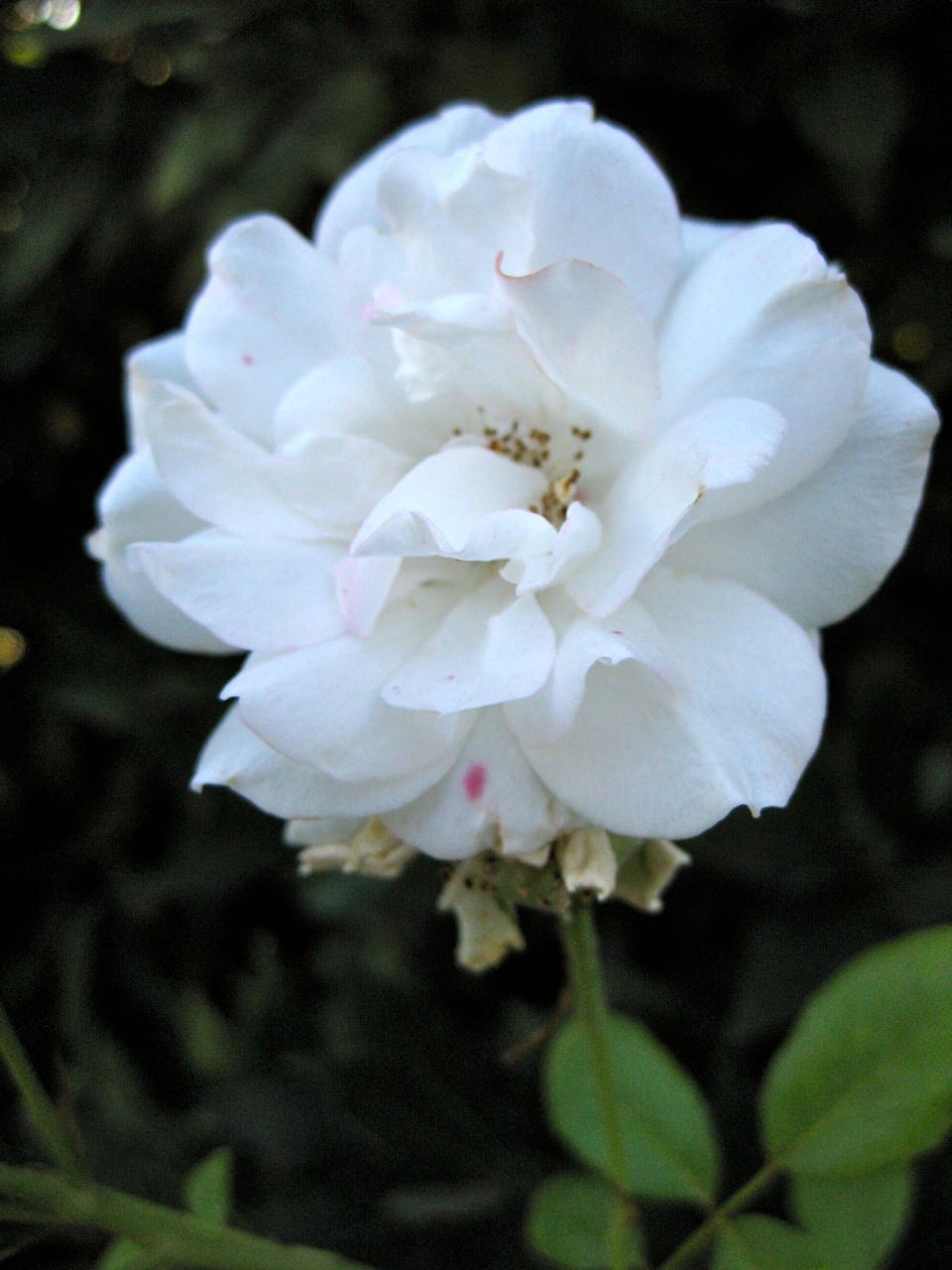
Iceberg is a floribunda rose, a class of roses characterized, according to the American Rose Society’s Handbook for Selecting Roses, by its “profuse ability to bear flowers in large clusters or trusses with more than one bloom in flower at any one time. This class is unrivaled for providing massive, colorful, long-lasting garden displays… Floribundas are hardier, easier to care for and more reliable in wet weather than their hybrid tea counterparts.” Iceberg was introduced in 1958.
Julia Child
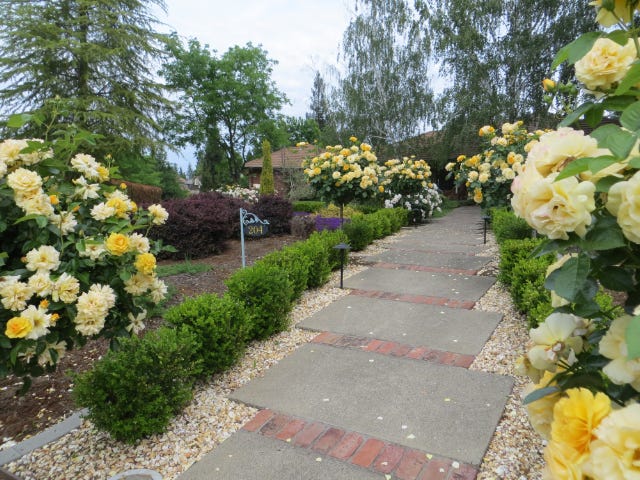
Master Rosarian Charlotte Owendyk of the Sierra Foothills Rose Society loves Julia Child so much, it lines her walkway. A floribunda with medium yellow blooms, this 2005 introduction - one that is also on Debbie Arrington’s list of heat tolerant roses - is also an American Rose Society’s Members’ Choice winner and an All-America Rose Selections champion.
Joy
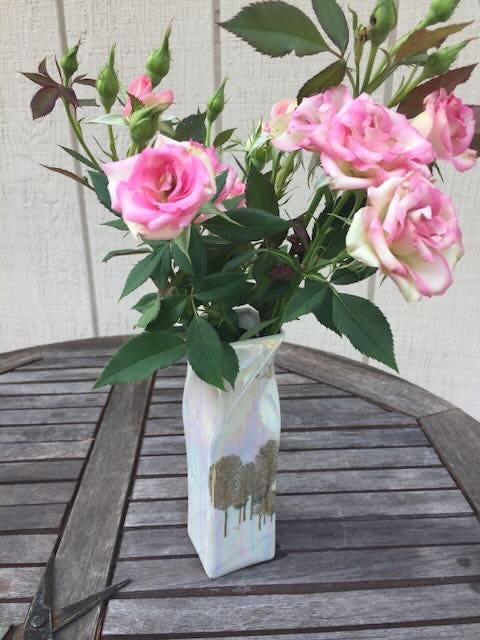
One of my favorite miniature roses that blooms it’s little head off, despite being grown in a container, sitting on reflective rocks, facing south, with the hottest side of the house right behind it. Debbie Arrington likes it, too. A pink blend, Joy was introduced in 2007. Joy was an American Rose Society Award of Excellence Winner, as well as an ARS Members’ Choice winner.
Here are a few other roses that are heat-tolerant, according to Debbie Arrington. Listen to her descriptions of these roses in the podcast at the top of the page.
Shockwave (Floribunda)

Day Breaker (Floribunda)

First Prize (Hybrid Tea)

Rosarian Baldo Villegas and his namesake rose, a mini-floribunda

And, I’m out of room for more pictures. The rest of the heat tolerant roses that Debbie mentions in the podcast:
Edisto (miniature)
Whirlaway (mini-floribunda)
Innocence (miniature)
The Drift Series of low growing shrub roses
The Knock Out collection of landscape roses, especially Home Run.
TRANSCRIPT - ROSES FOR THE HEAT with Debbie Arrington
(originally aired on the Garden Basics with Farmer Fred Podcast, Ep. 224, Aug. 2022)
Farmer Fred:
[0:00] We’re here at Harvest Day. It’s put on by the Sacramento County Master Gardeners here at the Fair Oaks Horticulture Center. Big public event showcasing the beautiful gardens here at the Fair Oaks Horticulture Center. There are practical gardens that can be applied to your own yard. If you ever get a chance to come to Harvest Day or one of the monthly workshops here at the Fair Oaks Horticulture Center, you ought to do so because you’re going to get a lot of good tips for your garden. We’re talking roses with Debbie Arrington, Master Rosarian. She’s answering rose and apparently tomato questions here today at the Fair Oaks Horticulture Center during harvest day. And fortunately for us, well, it’s still early morning when we’re doing this recording and it’s not gonna be fortunately as hot as it has been. But don’t tell that to the roses on the south side of the house, because they just seem to be suffering. Everybody in the United States is having unprecedented heat waves. So the question is, Debbie Arrington, which roses are best compatible with high heat situations?
Debbie Arrington:
[1:01] The roses that do best in high heat tend to be lighter colored roses. The darker roses, your red roses, they absorb all those sun rays and it just pries them to a crisp. And so you’ve probably seen your red roses not looking very well this summer. Olympiad, Chrysler Imperial, Mr. Lincoln, all your classic reds. It’s like they absorb all that extra heat and they just get fried. So it’s the lighter colored roses that tend to do better, such as your yellows and pinks. Now, a lot of yellows tend to fade in sun anyway.
Debbie Arrington:
[1:40] But my yellows that I like best in high heat, and they’re doing really fine this summer, are Julia Child and Shockwave. Those are two Floribunda roses. Julia Child is a beautiful butter yellow, and it tends not to fade. And because of the lighter color, it doesn’t absorb as much heat. And it seems to be holding up to this hot summer just fine. And Shockwave is a brilliant bright yellow that doesn’t fade either. And both Julia and Shockwave have beautiful bright green foliage that’s disease resistant and stays nice all summer long. So those are two floribundas I highly recommend for summer heat. Another floribunda that looks fantastic in heat or cold and looks great this summer, is the best looking rose in my garden right now, is a floribunda named Daybreaker. And Daybreaker gets its name because it looks like an early dawn with different shades of orange and yellow and pink. And no two blooms are the same. They’re all very individual. And it also has very clean, bright green foliage. And it’s quite heat resistant.
Of the larger roses in my garden, well, the larger hybrid teas, because the roses are bigger, they are suffering in this heat the most. Some of them seem to have coped with the heat better than others. And the one that’s doing best in my garden right now is an old-timer. It’s called First Prize, and it’s a bright neon pink. It’s a very, very bright pink, hot pink. But they’re very big roses, and they have a very nice form to them. And that one seems to be doing better than others. Also doing well are the landscape roses, the shrub roses, such as the Drift series. And those are roses that are grown to stay close to the ground and be easy care.
Debbie Arrington:
[3:37] They’re self-cleaning, which means that the blooms, once they’re spent, just drop off so you don’t have to deadhead them. And because they stay smaller and compact, they aren’t suffering in the heat as much as some others. Another good landscape rose is one called Home Run, and it’s part of the Knockout series. So, you know, knockout, home run, it makes sense. And it is a single hot pink rose. It has about five to six petals with real pronounced gold stamens in the middle. It’s blooming its little head off. It doesn’t seem to mind the heat at all. And another good one is the one that is the favorite parking lot rose of California, Iceberg. And Iceberg is an old floribunda that’s been around forever. But the white blooms are resistant to heat. And they’re also resistant to pollution, which is why it’s used so often in parking lots and long roadways and things like that. But it’s a very hardy rose. And the white stays pretty clean, too. A lot of white roses just look really crispy in high heat. But iceberg seems to still stay its nice, pristine white, no matter how hot it is.
Farmer Fred:
[4:44] One miniature that is doing well in my yard in a very high heat situation is Joy. And it’s just doing fabulous. Can you think of any other miniatures that are good for high heat situations?
Debbie Arrington:
[4:55] Nothing. Joy is doing really well in my garden, too, and Joy, for folks that aren’t familiar with it, it’s kind of a creamy white with a purple-pink edge. It’s got a pickety edge on it. It’s a real standout bloom. Other miniatures that are doing well, oh, there’s Adisto always does well in my garden, and Adisto is actually, I think it’s a mini-flora because it wasn’t released as a mini-flora, but I think they changed it. It’s a pink and purple blend, and it’s kind of on the reddish side. Even though it’s a darker color, it seems to be doing okay. It’s coping with the heat well. And one that’s a white and red blend, Baldo Villegas, named after our local rose expert. And that rose has found fans nationwide, and it’s a beautiful white and pink blend.
Farmer Fred:
[5:46] Well, I know where I can get that one, so that’s not a problem.
Debbie Arrington:
[5:50] Whirlaway, it’s a mini flora. It’s a little white rose, and it’s just perfect. It’s a beautiful mini flora. A mini flora is between a miniature and a floribundant, size-wise. So the blooms are about two inches across when they’re open. Another good white that’s doing well in the heat is Innocence, which is an old-time white miniature. It’s doing very well.
Farmer Fred:
[6:12] A lot of good roses for the heat. You have to know which ones. Debbie Arrington’s been providing the name. She’s a master rosarian, so I guess we will be leaning towards the lighter colored roses for those really hot situations.
Debbie Arrington:
[6:24] Well, ideally, roses like to be facing east. That way they get the morning sun, but then some afternoon shade. And that helps them, particularly here in Sacramento and other places where there’s a lot of high heat. You know, as in Arizona and places all over the country right now. That way they get, you know, enough sun to keep blooming. But when it’s really, really hot, they get the shade they crave.
Farmer Fred:
[6:47] That’s right. Some of the roses have been acting very weird this year in the heat, like smaller flowers, for example.
Debbie Arrington:
[6:55] Well, we’ve had in California the driest year in recorded history. And that lack of groundwater has really had a cumulative effect on any shrubs. And roses are, you know, they’re shrubs. And so this year, my roses are much smaller than usual, particularly my hybrid teas. And a lot of them are also not producing as many petals per flower. Ones that should have 30, 40 petals per flower are instead having 10 or 12 and look like a semi-double instead of a full rose.
Debbie Arrington:
[7:26] And this is all a result of not enough water and too much heat.
Farmer Fred:
[7:30] Another thing that’s happening to roses, and I get this question a lot, is why are there leaves coming out of the middle of the flower?
Debbie Arrington:
[7:36] Oh, yes. That happens when plants are stressed. It’s called faciation. And it’s a weird vegetative state that is caused by stress. And there is so much stress going on right now in plants’ lives that we see this sort of weird growth coming out of the middle. In my garden, Perfect Moment is the one that does it the most. And Perfect Moment is an older orange blend hybrid tea. And it has these monster blooms that look like they’re from the little shabahors. It’s very strange stuff. You will also see that if a plant is exposed to Roundup. But it is more severe, and it’s not just the one bloom. You’ll see it all over a new growth on the plant. It will have very strange, deformed growth.
Farmer Fred:
[8:23] Roundup, just one name for any sort of herbicide that has the active ingredient, glyphosate. And that’s a whole show in itself. Is glyphosate damage on roses? That’s another very common question we get. It’s something that may not even manifest itself until months later. And you even forgot you were even spraying around the roses.
Debbie Arrington:
[8:40] They’re hypersensitive. And that can also be drift from somebody else’s yard. Roses and glyphosate do not mix.
Farmer Fred:
[8:48] Debbie Arrington, Master Rosarian, the proprietor, along with Kathy Morrison, of the Sacramento Digs Gardening blog. If you go to their website, you can find out more information about it, I bet.
Debbie Arrington:
[9:01] The easiest way to find us is on Facebook. Just type in Sacramento Digs Gardening. That will take you to our Facebook page. Hit any of those links that will take you to the blog.
Farmer Fred:
[9:09] Debbie Arrington, thank you so much.
Debbie Arrington:
[9:11] Thank you.
Thanks for Subscribing and Spreading the Word About the Beyond the Garden Basics newsletter and podcast. I appreciate your support.
Fred Hoffman is also a University of California Cooperative Extension Master Gardener in Sacramento County. And, he still likes to ride his bike(s).